Best Practices for Drone-Based Visual Inspections
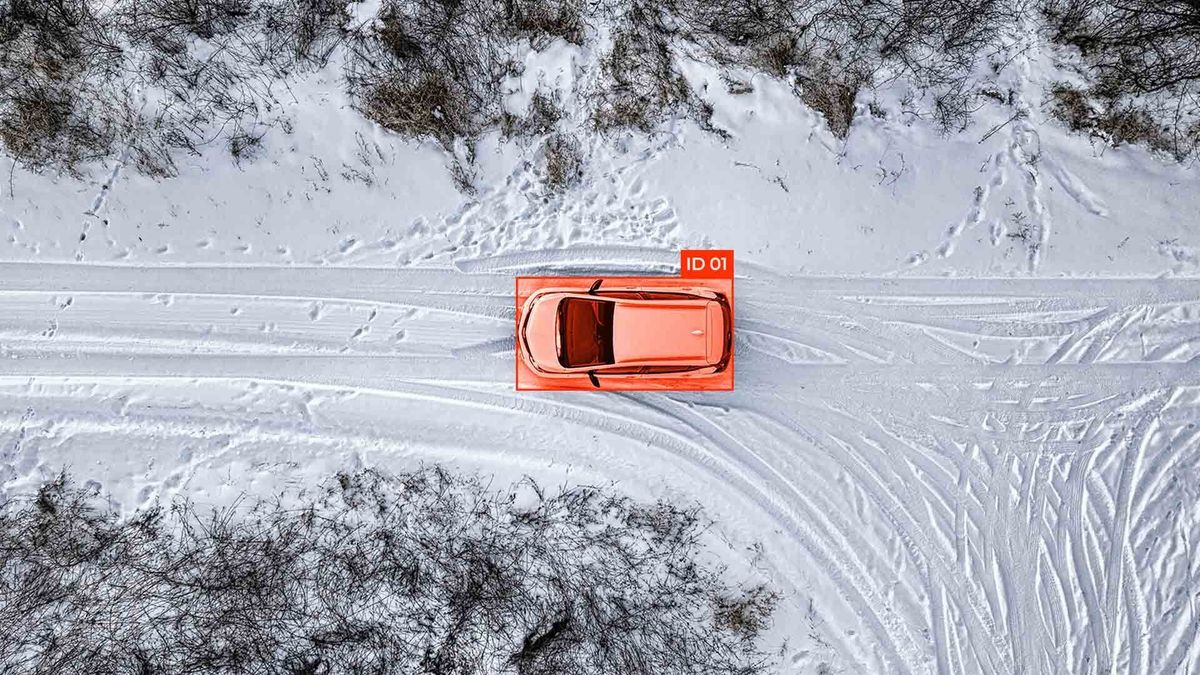
In the past, inspecting a tall tower, a long bridge, or a large factory roof required hiring climbers, setting up expensive lifts, or using helicopters. This was slow, costly, and dangerous for people. Today, drones have completely changed this process, becoming the most effective tool for visual inspections. They ensure safety by removing the need for people to work at great heights, and they provide speed, as they can fly around an object in a matter of hours.
Moreover, they guarantee high accuracy thanks to high-resolution images, which allow for the creation of detailed 3D models. This efficiency leads to significant cost savings. The expense of operating a drone is much lower than renting heavy equipment, helicopters, or paying a large team of inspectors. This is why drones have become an industry standard in many sectors.
Overall, the use of drones enables companies to obtain better, more detailed data more quickly, affordably, and safely than ever before. They transform routine and risky work into a simple, controlled, and automated process, allowing teams to focus on analyzing the gathered information rather than just collecting it.
Quick Take
- Successful UAV inspection requires careful setting of camera parameters, using a short shutter speed to avoid blur, and controlling weather conditions.
- It is mandatory to do an on-site frame check immediately after landing to ensure there are no missed areas or low-quality photos.
- Data processing involves structuring and organizing thousands of photographs, removing unusable frames, and then utilizing computer vision to detect defects automatically.
- Inspection AI uses predictive analytics to forecast critical repair deadlines.
- The ultimate goal is full autonomy of flights and analysis, where the drone decides the route itself, and the AI automatically generates the report without human involvement.
From Data Collection to Analysis
The quality of the final inspection report depends entirely on how clean the images collected by the drone are. Adhering to best practices for data collection directly affects the result delivered by the inspection AI.
Collecting Quality Images
Successful UAV inspection demands precision, much like studio photography, but in conditions of wind and sun. To get clear frames, the camera must be set up carefully. It is important to monitor the correct camera settings and avoid too high a drone flight speed. If the drone is flying fast, the shutter speed must be shorter to prevent blur.
It is best to avoid strong winds or shooting against bright sunlight to prevent deep shadows that conceal defects. Although modern drones have built-in stabilizers, using shooting modes designed specifically for inspections will help achieve the most stable results.
It is also important to perform an on-site frame check immediately after landing. This guarantees that you have not missed any critical areas and that all photos are clear. A repeat flight is always simpler than returning to the object the next day.
Image Processing
After the data is collected, the image processing stage begins, which converts raw frames into useful insights.
The first step is structuring and organizing the data. Thousands of photos need to be ordered using logical names, so the necessary files can be quickly found later for analysis. Next is the first review and removal of unusable frames. This clears out unnecessary "noise", duplicates, or low-quality photos before the data proceeds to analysis.
Next comes the turn of technology, utilizing computer vision for automatic analysis. This is where the inspection AI starts its work, independently detecting cracks, corrosion, damage, or other anomalies.
The final step is report compilation, where all found defects are visualized on 2D plans or 3D models. The report must contain precise coordinates and a photo of each damage. This makes it easy to compare the object’s condition dynamics with previous inspections and understand how quickly a problem is developing, allowing for timely repair planning.
Choosing the Right Drone Type for the Task
A successful inspection starts with choosing the right drone. There is no single ideal drone for all tasks. The choice depends on how large the object is, how high it is located, and what specific damage we are looking for.
Stability and Autonomy
Different drones are built for different conditions. For UAV inspection, two main types are used:
- Multirotor Drones. These are the most common models. They can hover in place, fly close to the object, and provide high shooting accuracy. They are ideal for detailed inspection of bridges, towers, or facades. However, their flight time is usually limited, and they are less resistant to strong winds and weather conditions.
- Fixed Wing Drones. These resemble small airplanes. They cannot hover but fly significantly longer and faster. They are ideal for inspecting large territories, such as long pipelines or large agricultural fields, where high flight autonomy is required.
For large objects in bad weather, a drone with better wind resistance and a larger battery is always needed.
Sensors and Payload
What the drone sees depends on its camera.
- RGB Cameras. These are regular cameras that see colors, like a human. They are the standard for finding visible defects: cracks, rust, paint damage, or roof fade.
- Thermal Imagers. These cameras see heat. They are necessary for finding invisible problems, such as heat leaks in building insulation, equipment overheating at power plants, or issues with solar panels.
- Multispectral Cameras. Used primarily in agriculture and ecology. They see the state of vegetation, helping to determine which areas of the field are sick or need water.
- LiDAR Sensing. This is not a camera, but a laser scanner. It creates a precise 3D model of the object from millions of points. LiDAR is needed when precise dimensions are important, not just a photograph, for example, for measuring the volume of bulk materials in warehouses or for creating very accurate maps under dense vegetation.
Flight Control
The way the drone flies affects its safety and data quality.
- Autonomous Routes. This is the standard for most UAV inspections. The operator sets the route in the program, and the drone flies it itself, taking photos at regular intervals. This guarantees that the entire area is covered with high accuracy, and it is best for repeatable inspections.
- FPV. This is manual piloting, where the operator sees the image from the drone in goggles, as if sitting in the cockpit. FPV is used for inspecting very complex and hard-to-reach places that are difficult to fly to on an autonomous route, for example, inside large reservoirs, under bridge spans, or close to turbine blades. This requires high pilot skill.
Best Practices for Teams and Processes
For UAV inspection to become a systematic and scalable process, not just a one-time action, clear operating standards must be created. This guarantees that inspections conducted by different operators at different times will have the same high quality.
System and Standardization
A systematic approach allows for transforming drone work into a reliable business process. The team must clearly define exactly how each type of inspection should be performed. For example, what the minimum distance from the power line should be, what image overlap is needed for 3D modeling, or what the minimum allowed camera shutter speed is.
The use of checklists before and after each flight is also mandatory. Before the flight, the drone's condition, batteries, and flight permits are checked. After the flight, the quality of the collected data and its proper storage are verified.
The inspection log records the date, time, operator name, drone type, sensors used, and any unusual situations. This helps track the service history of the drones and maintain a record of the objects.
Data Analysis and AI Improvement
When the inspection AI detects a defect, it is important that all specialists use uniform annotation standards. For example, always marking a crack in the same way. Clear rules for media storage are also needed so they can be easily found years later.
The team should regularly check where the inspection AI made a mistake and where the operator made a mistake. This analysis allows for refining the inspection AI and better training the pilots. This guarantees that the entire inspection system becomes more accurate with every new flight.
AI and the Future of Drone Inspections
The true value of UAV inspection is revealed not in the flight, but in the data analysis, where artificial intelligence plays the main role.
Today, computer vision is already capable of automatically scanning thousands of images collected by the drone. Inspection AI independently finds the smallest cracks, rust, deformations, or other damages, which is significantly faster and more accurate than manual human inspection. This allows engineers to focus on repair planning rather than searching for defects.
The next step is predictive analytics. Where the AI does not just record a problem, but also forecasts when it will become critical. For example, by analyzing the rust development rate based on data over several years, the system can predict how many months until urgent repair is needed. This gives companies the ability to transition from emergency response to scheduled maintenance.
The future of such technologies moves toward multisensor inspections and full autonomy. Drones increasingly collect data simultaneously from several sensors: regular video, high-precision 3D models, thermal imagers that see heat leaks, and LiDAR for accurate shape measurement. The ultimate goal is full autonomy of flights and analysis without operator involvement. The drone will decide the route itself, collect data, and the AI will automatically generate a report and send it to the work planning system.
FAQ
What is inspection AI, and what role does it play in data analysis?
Inspection AI is a computer vision technology that automatically scans thousands of frames. It independently detects small defects, such as cracks or corrosion, faster and more accurately than a human, allowing engineers to focus on repair planning.
When should multisensor drones be used, and when fixed-wing drones?
Multisensor drones are ideal for detailed inspection of objects up close because they can hover in place. Fixed-wing drones are needed for inspecting large, extended areas, such as pipelines, due to significantly higher flight autonomy.
What is the difference between thermal imagers and RGB cameras?
RGB cameras see colors and are used for finding visible defects, such as rust. Thermal imagers see heat, allowing them to detect invisible problems, such as heat leaks in insulation or overheating electrical equipment.
Why is LiDAR sensing needed?
LiDAR is a laser scanner that creates a precise 3D model of the object from millions of points. It is necessary when it is important to obtain accurate dimensions, not just photographs, for example, for measuring the volume of bulk materials in warehouses or profiles of infrastructure.
What is predictive analytics in the context of drone inspections?
This is an AI function that not only records an existing defect but also forecasts when it will become critical. This allows companies to plan repairs in advance and transition from emergency to scheduled maintenance.



Comments ()