Multi-Object Tracking Annotation with ID Consistency
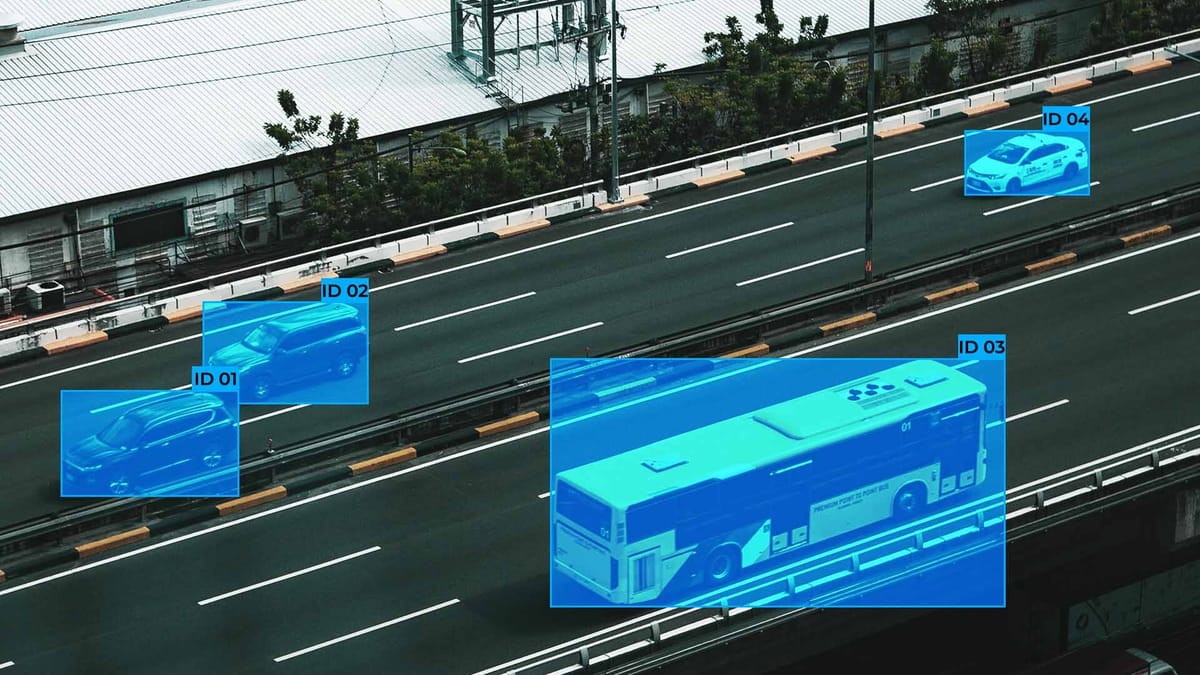
In video analytics tasks related to computer vision, the concept of ID consistency is the factor that transforms a set of disjointed detections into a coherent movement story. While standard detection simply states the presence of an object in a specific frame, tracking with unique ID support allows the model to understand that an object at the first second of the video and the same object at the tenth second are the same entity. ID continuity ensures the logical integrity of data, which serves as the foundation for complex computations.
The stability of IDs directly affects model accuracy in real-world scenarios. To predict an object's intent, the system needs to analyze its trajectory over a certain period, which is impossible without a stable identifier. A loss of ID consistency or a sudden change creates false data, which can lead to errors in prediction and decision-making by AI algorithms.
Quick Take
- Without stable IDs, models cannot correctly count objects or calculate safe trajectories in autonomous driving and robotics.
- Modern interpolation tools and AI-trackers take over mechanical tracking.
- Visualizing trajectories and using automatic scripts help avoid critical errors like ID Switches.
- MOT development is moving toward combining video data with LiDARs and Re-identification technologies for global tracking across different cameras.
Application Areas and Practical Tracking Challenges
Object tracking technology is key for real-time systems. Correctly executing MOT annotation allows the computer not just to see the world, but to understand the logic of movement for every individual entity in space.
Practical Use
In today's world, object identity tracking finds application in many industries where data accuracy is decisive. Each of these areas requires a perfect link between frames so the system can make correct decisions.
- Autonomous driving. Self-driving cars must know that a pedestrian on the sidewalk is the same object that just started moving to correctly calculate braking.
- Video surveillance. Security systems use consistent IDs to track a person's route through a facility without falsely duplicating their profile.
- Sports analytics. In football or basketball, it is important to follow each player individually to collect statistics on mileage and the efficiency of a specific athlete.
- Retail. Smart stores track customer movement to analyze popular zones, where an ID error would lead to incorrect conclusions about customer behavior.
- Robotics. Warehouse robots must clearly distinguish between boxes and obstacles to avoid losing their target while maneuvering between racks.
The absence of stable numbers in such systems leads to chaos. If a program constantly changes object numbers, it will be unable to predict an emergency on the road or correctly count the number of visitors in a hall.
Main Difficulties During Annotation
Creating high-quality tracking data is a much more complex process than standard photo labeling. Annotators face situations where the logic of track assignment is severely tested by external factors.
These factors require specialists to pay maximum attention to every detail. Even a brief occlusion by a pole or a tree can cause the system to "lose" the movement history; therefore, the annotator must manually confirm the continuity of every path.
Methods for Ensuring Consistency
Maintaining a stable identifier requires the labeling team to combine clear logical rules with powerful software tools. Every object movement must be documented so that its travel history remains continuous from the first frame to the last.
Strategies and Practical ID Control Methods
In professional labeling, several proven approaches are used to ensure consistent IDs are not lost even in the most complex situations. Primarily, the rule of reassignment applies, stating that an object that temporarily disappears behind an obstacle or leaves the frame must receive its original ID upon return. This requires the annotator to closely observe visual cues such as clothing color, shape, or unique physical details.
A vital part of object identity tracking is using previous movement data. Annotators rely on the trajectory the object had before being occluded to predict its appearance in a logically expected location. Additionally, the pre-labeling stage plays a major role, where specially trained models make the first attempt to link objects over time. In this case, the human does not create every track from scratch but only confirms that the program performed the track assignment correctly and did not confuse two similar pedestrians or vehicles.
Automation Tools for Stable Tracking
Modern video annotation software offers features that radically change the speed and quality of the process. One of the most effective tools is interpolation, which automatically calculates an object's position between two keyframes. An annotator only needs to place a label at the start and end of the movement, and the program fills in the intermediate frames, perfectly preserving consistent IDs.
The use of AI-assisted tools significantly reduces the strain on the specialists' vision and attention. Intelligent trackers are capable of "sticking" to an object and following it even as it changes scale or rotates. This allows the team to work much faster, as manual correction is only needed during moments of full occlusion or sharp changes in direction. This combination of human experience and computer precision ensures that data will be suitable for training the most complex behavioral analysis models.
Quality Control and Impact on Model Training
The final stage of data preparation for MOT annotation determines how reliable an intelligent system will be in real conditions. Even a small number of errors in the links between frames can cause the model to "lose" objects at critical moments.
Verification Methods and Typical ID Errors
Quality control in video is much more complex than checking regular photos because an error might be hidden in just one frame out of a thousand. Most often, annotators make a mistake known as an ID Switch. This happens when two similar objects pass close to each other, and their IDs accidentally swap. To identify such issues, quality managers use special viewing modes where the entire trajectory of an object can be seen as a line across the whole clip.
Another common problem is ID duplication after occlusion. When an object disappears behind a tree and reappears, an annotator might mistakenly assign it a new ID instead of maintaining consistent IDs. To check for such cases, automatic scripts are used to highlight "short tracks" – objects that exist for only a few seconds. This allows for quickly finding broken chains and merging them into a single movement history before the data reaches the model training stage.
How High-Quality Labeling Shapes System Intelligence
The quality of track assignment directly affects the neural network's ability to predict the future. If a dataset contains stable and clean trajectories, the model learns to understand movement physics and object inertia. This allows the system to predict where a car will appear after exiting a tunnel, even if it was invisible for several seconds.
Reliable annotation with perfectly consistent IDs provides three key advantages for training:
- Reduced False Switches. The model makes fewer mistakes when trajectories intersect because it was trained on clear examples of correct object separation.
- Reliable Movement Prediction. The system better calculates speed and direction, which is critical for the safe maneuvering of autonomous transport.
- Re-ID Stability. Algorithms become capable of recognizing an object by its visual features even after a long absence from the field of view.
Ultimately, investments in thorough ID verification pay off with the reliability of the final product. Models trained on high-quality tracking demonstrate a much lower level of "noise" and false positives, making the technology safe for use on roads and in public spaces.
Vectors of Multi-Object Tracking Development
Object tracking technologies are transforming from simple observation of rectangles on a screen to a deep understanding of the physical world. Modern requirements for intelligent systems dictate new annotation standards, where the focus shifts from data quantity to semantic complexity and interconnection.
Global Trends in Complex Scenarios
One of the main development directions is working with ultra-complex scenes and extra-long video streams. While developers previously focused on short clips, today the industry requires stable tracking over segments lasting tens of minutes. This is critical for security systems in airports or large logistics centers, where it is vital to maintain an object's consistent IDs for the entire duration of its stay on the premises.
In parallel, tracking is being closely merged with Re-identification technologies. This allows the system to "recognize" a person or a car even after they have completely disappeared from view for a long time or moved into the view of a different camera. Annotating such data requires creating vast neural links between different video files, taking MOT annotation to the level of global environment analysis.
Multimodality of AI-Assisted Approaches
The future of MOT is inextricably linked with multimodal data. Modern drones and robots no longer rely solely on video. They combine camera images, LiDAR point clouds, and radar data. Annotating such projects requires synchronizing IDs in 2D and 3D space simultaneously so the model sees the world as volumetrically and accurately as possible.
In this context, the role of AI-assisted annotation becomes decisive. Due to the colossal volume and complexity of the data, manual labeling becomes physically impossible. Artificial intelligence takes on most of the work in predicting trajectories and maintaining identifiers, while the human transforms into a highly skilled editor who intervenes only in the most controversial moments.
FAQ
How do you annotate an object if it breaks into parts?
Usually, specific project rules establish a priority: either annotate the entire vehicle as a single entity with one ID, or as two separate entities if they can move independently. This is important so the prediction model doesn't get confused when a trailer and a cabin perform a complex turn maneuver.
What are "Ghost Tracks" and how can they be avoided during annotation?
These are false trajectories created by an automatic tracking algorithm on background noise or light play that the model perceived as a real object. An annotator must promptly delete these phantom IDs so the neural network doesn't learn to see targets where none exist.
Does video resolution affect ID consistency quality?
Yes, low image quality makes visual features of objects, such as color or texture, blurred, which significantly increases the risk of a false ID switch during trajectory intersections. The higher the clarity, the easier it is for the annotator and algorithm to recognize an object after it reappears from behind an obstacle.
How do you label IDs for objects that change their class?
In complex scenarios, an object keeps its unique ID throughout the video, but the annotator changes its attribute or category at the point of transformation. This allows the model to understand the object's evolution and changes in its dynamic characteristics, such as a sharp increase in speed.
How do you handle IDs if the camera itself is moving at high speed?
In such cases, camera motion compensation tools are used to help the algorithm understand that coordinate changes are caused by the movement of the camera itself. This allows bounding boxes to stay stable on objects despite sharp turns or background shaking.
Does skeleton annotation help maintain an ID?
Yes, tracking key body points provides the model with much more information about the unique pose and movement specifics of a specific person. Such detail significantly eases the recognition process after the person has been temporarily occluded by another object.
What do you do if two objects merge into one forever?
The annotator should close one of the tracks at the moment of full merging, following the logic of the specific project instructions. Usually, the ID of the object that visually dominates or becomes the "carrier" of the other is preserved to maintain database cleanliness.
Are there limits on the number of IDs in a single video?
There are almost no technical limits, but in scenes with very large crowds, verifying thousands of trajectories becomes extremely difficult for the human eye. For high-quality work, such videos are often broken into separate layers or zones of responsibility so the annotator can focus on a specific group of objects.
Comments ()