Interactive Trajectory Planning: Modeling Dynamic Agent Interactions for Automotive Prediction
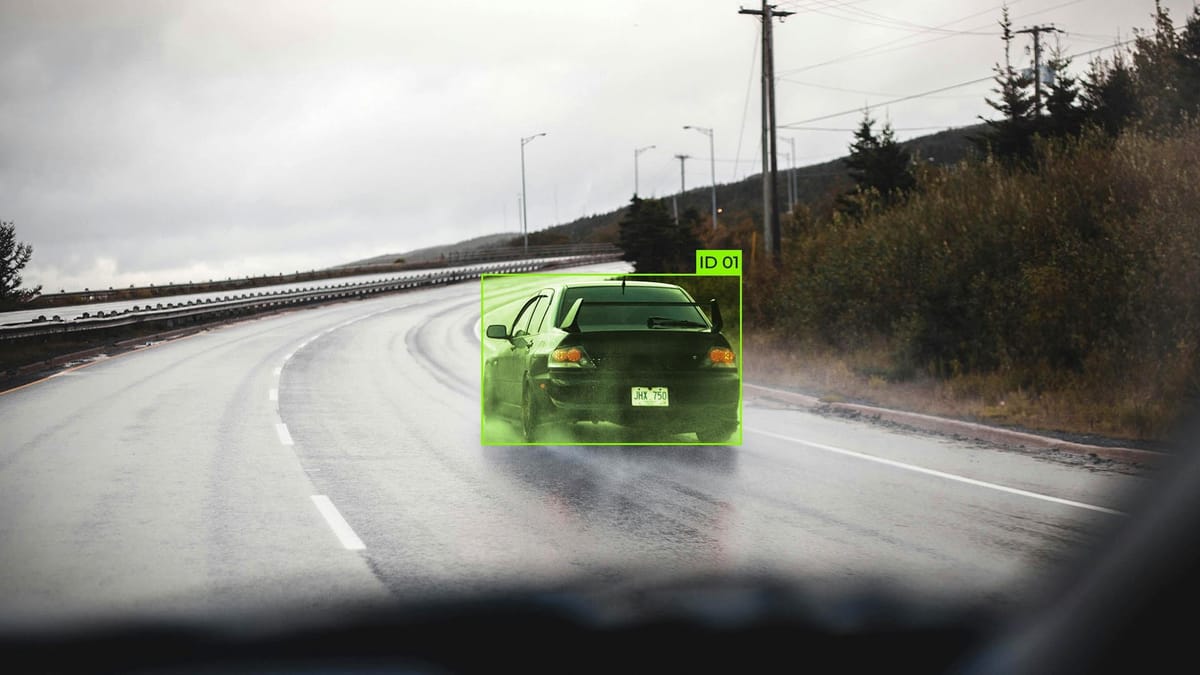
Unlike traditional trajectory prediction, which considers each vehicle or pedestrian independently, interactive trajectory planning explicitly models the interdependencies between agents, capturing how the behavior of one participant affects the others. Game theory trajectory approaches are often used here to model strategic interactions and anticipate mutual influences among agents. This approach is essential for safe navigation in urban environments where vehicles, cyclists, and pedestrians interact and react to each other.
By integrating historical traffic data, scene context, and multi-agent dynamics, interactive trajectory planning enables autonomous systems to predict a wide range of possible outcomes, improving decision-making and reducing the risk of collisions.
Key Takeaways
- Rich benchmarks help ensure fair comparisons between robots and models.
- Industry stacks shape which data and models are practical at scale.
- Quantifying uncertainty is essential for safety margins.
- Graph and transformer methods reimagine interaction dependencies.
Definition of a prediction pipeline: inputs, modeling characteristics, and outputs for different road scenes
A prediction pipeline for road scenes is a structured data processing and analysis process designed to predict the behavior of objects under various road conditions.
Its goal is to integrate various data sources, transform them into functional characteristics for modeling, and obtain predicted results that can be used for autonomous driving, driver assistance systems, and transportation infrastructure management.
Inputs
A prediction pipeline uses several types of data:
- 3D LiDAR point clouds to determine the positions of vehicles, pedestrians, obstacles, and scene geometry.
- Cameras and videos to identify objects, road signs, and road surface conditions.
- Vehicle sensor data, speed, acceleration, steering angle, and radar information.
- Maps and digital maps contain structural data about road infrastructure, lanes, and restrictions.
Modeling Features
- Object trajectories: position, speed, direction of travel.
- Traffic scenarios: number of lanes, intersections, pedestrians, obstacles.
- Spatio-temporal relationships, interaction between objects in time and space.
- Scene context: road signs, traffic lights, road surface.
Models used
- Deep neural networks (RNN, LSTM, Transformer) for predicting object dynamics.
- Graph neural networks (GNN) for modeling vehicle-pedestrian interaction.
- Specialized CNN/3D CNN for image and point cloud processing.
Outputs
The prediction pipeline generates different results depending on the type of road scene:
- Prediction of vehicle and pedestrian trajectories.
- Information for route planning: lanes, speed limits, and route changes.
- Recognition of hazardous situations: potential collisions, road hazards, and emergency maneuvers.
- Assessment of road surface conditions and detection of changes that may impact traffic.
Datasets and Benchmarks Shaping Progress: Argoverse, Waymo Open, nuScenes
Datasets and benchmarks offer a substantial amount of annotated data on the movement of vehicles, pedestrians, and other road users under various conditions, enabling researchers and developers to train and evaluate models for autonomous driving and driver assistance systems. Below are the key datasets shaping progress in this field.
Taxonomy of trajectory prediction methods
Let's consider how classical kinematics and modern networks have come together to form the contemporary prediction toolkit.
Graph neural networks and graph convolutional networks for multi-agent interactions
Graph Neural Networks (GNNs) and Graph Convolutional Networks (GCNs) are modern approaches in machine learning that enable modeling complex interactions between dynamic agents in road and urban environments.
For predicting vehicle and pedestrian trajectories, each agent is considered as a node of a graph, and the interactions between them are considered as edges describing spatial or dynamic dependencies.
GNNs allow aggregating information from neighboring agents and their characteristics to form a generalized view of the scene state for each node. This enables effective multi-agent planning, where the predicted trajectories account for the interactions of all agents in the environment.
Graph Convolutional Networks (GCN) apply convolution operations to the graph, which allows transmitting information throughout the graph and revealing complex relationships between agents. GCNs can work with multi-level features of nodes and edges, integrating the context of the scene, road infrastructure, and social interactions. They are helpful for interactive prediction, where the future trajectory of one agent depends on the dynamics of others, making such models indispensable for autonomous driving, robotics, and traffic planning in complex urban environments.
Transformers in Traffic Prediction
Transformers in traffic prediction are an approach to modeling dynamic agents that enables predicting the trajectories of vehicles, pedestrians, and other road users, taking into account complex interactions and the scene's context. Unlike classical recurrent models (RNN, LSTM), transformers use the self-attention mechanism to simultaneously assess the importance of each agent and its past states in the context of all other agents in the scene.
Each agent is represented as a sequence of states, and self-attention allows the model to determine which neighboring agents or previous points in time have the most influence on the future trajectory.
Transformers enable modeling long-term dependencies and multi-level interactions, which are challenging to implement using RNN or GNN. They also help reduce the dynamics gap, bridging the difference between predicted and real-world agent behaviors in complex traffic scenarios.
Goal-based and Binding Prediction: TNT, MultiPath++, and CoverNet
Goal-based and binding prediction is an approach to predicting movement trajectories that diverges from directly regressing the coordinates of future positions and instead constructs a discrete or multi-objective space of potential trajectories. The basic idea is first to define a set of "goals" or "links" for agents and then predict the most likely trajectories based on these goals, which enables modeling multi-agent interactions and avoiding physically unrealistic predictions.
Open source stacks and industry practices: Autoware, Apollo, Tesla, Waymo, and Aurora
Open-source stacks and industry practices in autonomous driving encompass hardware, sensor data, perception and motion planning algorithms, as well as trajectory prediction and control modules. The use of open stacks and application solutions ensures accelerated adoption of autonomous driving technologies, standardization, and the ability to integrate different approaches.
Key examples and practices
- Autoware. An open stack for autonomous driving, including modules for localization, perception, planning, and control. Used for research, prototyping, and training autopilot systems.
- Apollo. A complete open framework for autonomous driving with support for LiDAR, camera, and radar sensors, as well as prediction and planning modules. Provides a scalable platform for developing commercial and research solutions.
- Tesla. An industrial solution that integrates its own sensors and cameras with prediction, control, and autopilot algorithms. Tesla's practice demonstrates the application of deep learning to real-world road environments and the continuous updating of models across a fleet of vehicles.
- Waymo. Uses its own stack of eye-based LiDAR, cameras, and radar for motion perception and prediction. The company uses comprehensive simulations and real-world tests to validate autonomous systems in complex urban environments.
- Aurora. Focuses on the integration of hardware and software for autonomous transportation systems, including prediction, planning, and safe control algorithms. Optimizes interactions between sensor data and multi-user motion prediction.
FAQ
What is interactive path planning, and why is it essential for autonomous vehicle prediction?
Interactive path planning is an approach in which autonomous vehicles predict and plan their own movements, taking into account interactions with other road users. It is important because it allows for safe and accurate prediction of behavior in dynamic, multi-user road scenarios.
What inputs do modern prediction pipelines use?
Modern prediction pipelines utilize agent trajectories, sensor data, high-resolution maps, road infrastructure information, and scene context cues, including road user interactions and traffic rules.
What datasets and benchmarks are driving progress in this field?
Large-scale public datasets are driving progress in this area and benchmarks such as the Waymo Open Dataset, nuScenes, Argoverse, INTERACTION, KITTI, and Lyft Level 5. They provide multi-sensor data and standardized metrics for comparing perception, prediction, and motion planning algorithms.
How do classical physics-based approaches compare to deep learning methods?
Classical physics-based approaches are interpretable and robust, but limited in complex scenarios. In contrast, deep learning methods are better suited for modeling nonlinear and multi-agent behavior, albeit at the expense of requiring large amounts of data and offering less transparency.
How do graph neural networks help model multi-agent interactions?
Graph neural networks model the interaction of multiple agents by representing them as graph nodes with edges that encode spatial, temporal, or behavioral relationships, allowing the model to learn to take into account the mutual influence of agents when predicting their actions.
How do industry stacks approach forecasting differently?
Industry stacks differ in their approaches to forecasting: some use open models and simulations for multi-agent scenarios (Autoware, Apollo), while others integrate their own sensors and deep learning for real-world road environments (Tesla, Waymo, Aurora).

Comments ()